

January is Cervical Health Month and a time for women to focus on reproductive health. Depending on where you live, scheduling a pap test can take a few weeks, so now is a great time to schedule your appointment and cross your wellness visit off the list.
There are many different factors that can increase your risk of developing cervical cancer. The American Cancer Society has estimated that there will be 13,960 new cases of “invasive cervical cancer” diagnosed in 2023 alone. Approximately 4,300 women may die from cervical cancer because of late detection, according to the ACS.
The Centers for Disease Control and Prevention (CDC) estimates that almost 200,000 American women are diagnosed with cervical precancer. Precancerous cells indicate a mutation of normally healthy cells in the cervix. The CDC reports that an average of 11,000 women in the United States are diagnosed with cervical cancer caused by the Human papillomavirus (HPV).
Most health insurance plans provide one free wellness visit, including a cervical cancer screening. If you have been putting off your test, or if it has been several years since you had one, here is an important checklist of things you should know to help reduce your risk of developing cervical cancer.
What Is Cervical Cancer?
The lower part of the uterus is a collection of strong tissue that provides structure and support between the vaginal canal and the uterus. Cervical cancer is a unique cancer type that develops in this area (the cervix).
Cervical cancer screening can detect precancerous cells that may indicate a high risk of developing reproductive cancer. Like other types of cancer, cervical cancer is diagnosed in stages I to IV, which depends on the development of the disease and the proliferation of cancer cells to other areas of the body.
- Stage I and Stage II indicate cancer cells in the cervix area only.
- Stage III and Stage IV are diagnosed when cancer cells have migrated to lymph nodes, other major organs, and surrounding tissues.
Early detection of cervical cancer is very important. There are surgical procedures that can remove cancerous or precancerous cells. In some cases, women may opt to have a hysterectomy to further reduce the risk of developing uterine, fallopian, and ovarian cancers.
What Is the Survivor Rate for Cervical Cancer?
According to Cancer.gov, women diagnosed with early-stage cervical cancer have a five-year survival rate of 91%. In the early stages, before cancer has spread to other tissues and regional lymph nodes, there are more interventions (including surgery and chemotherapy) that can put cervical cancer into remission.
However, when cervical cancer has spread to other nearby organs and through the lymph nodes, the average five-year survival rate is 60%. Once cancer has metastasized, cancer cells easily spread throughout the body. The presence of systemic cancer in multiple areas of the body is referred to as Stage IV and a terminal diagnosis.
Cervical cancer screening annually is the best way to reduce the risk. If you develop cervical cancer, finding out quickly will help you get the best intervention treatment, and it can save your life.
Is Cervical Cancer Hereditary?
Cervical cancer is not thought to be hereditary or a condition that is inherited from your parents. Other cancers can have a hereditary factor, but what can be inherited is the susceptibility to contract HPV infection. Studies have shown that some people can have a lowered immune system response to HPV and may contract it more easily.
An HPV infection is linked with the development of cervical cancer. Practicing safe sex to reduce your risk of contracting HPV is key. As are regular pap smears, and in some cases, punch biopsies of uterine tissue to check for cancerous cells below the top layers of endometrial tissue, which may not be detected by other screening tests.
What Are the Risk Factors for Cervical Cancer?
When caring for your health, you want to learn as much as you can about the potential risk factors for developing cervical cancer. Just as regular cervical cancer screening tests help reduce your risks, so do lifestyle changes.
You will find that many of the risk factors are cumulative; if you have two or more lifestyle or health conditions, your risks increase substantially. Protect your health by understanding what the risk factors are and how to reduce them to lower your chance of developing cervical cancer.

Smoking Tobacco Products
It is well known that smoking tobacco products substantially increases the risk of developing a variety of different cancers. While people understand that lung cancer screening is critical for smokers, the truth is that smoking can trigger cancer anywhere in your body.
Smoking weakens the immune system, which can make it harder to fight diseases and infections, including HPV. Long-term infection of HPV is one of the leading causes of cervical cancer. When women have HPV persistently, that greatly increases the risk of developing cervical cancer.
Smoking can trigger the mutation of healthy cells due to the 5,000+ chemicals found in each cigarette. Smokers can also develop precancerous lesions and cervical dysplasia linked to HPV infection, but at higher incident rates and with greater severity compared to non-smokers.
Because smoking has such a detrimental impact on immune system functioning, it can also hinder response to cancer treatments. Several clinical studies suggest cervical, colon, lung, and breast cancer treatments for smokers are much less effective, including oral radiation medications and chemotherapy.
High-Risk Human Papillomavirus (HPV)
This sexually transmitted infection has no cure, and it becomes a lifelong health condition. High-Risk Human Papillomavirus, or HPV, is a group of related viruses that infect the genital area (for men and women).
There are actually over 200 different types of HPV, and they are split into two risk groups:
- Low-Risk HPV: Can cause genital and anal warts but have a low risk of developing into cancer. They can be painful and uncomfortable and also spread HPV to sexual partners and infants during childbirth.
- High-Risk HPV: This group of HPV viruses has the highest risk of causing cancer. Persistent infection with this type of HPV is associated with the greatest number of reproductive cancer diagnoses.
The HPV vaccine is recommended for women twenty-six (26) years of age or younger and men twenty-one (21) years or less. Individuals who did not start the HPV vaccine prior to age fifteen require three doses of the vaccine over a six-month period.
The Centers for Disease Control and Prevention report that HPV infections have dropped 88% among teenage girls and 81% among young adult women. For women who have received the HPV vaccine, “the percentage of cervical precancers caused by the HPV types most often linked to cervical cancer have dropped by 40%.”
If you are twenty-one or younger, consider getting your HPV vaccine. If you have a daughter, the ideal age for administering the vaccine is 10-11 years. Talk to your pediatrician or primary care provider to learn more about reducing your risk of cervical cancer with regular screening and the HPV vaccine.

Oral Contraceptives
Taking oral contraceptives can both increase your risk and also help protect you from developing cervical cancer. Oral contraceptives have been found to reduce other types of reproductive cancers like endometrial and ovarian cancers.
However, the synthetic hormones (estrogen and progestin) in oral contracepts can influence the growth and mutation of cervical cells, which can increase the risk of developing cervical cancer. Some studies also suggest that long-term use of oral contraceptives (several years) may also be related to some cervical cancer diagnoses. That risk drops after cessation of taking “the pill.”
Clinical studies are investigating the link between HPV infection and oral contraceptives. Some studies suggest that the hormones from oral contraceptives can make HPV infections more severe. That may also increase the risk of developing reproductive cancers.
Immune System Deficiency
If you have a compromised immune system, your risk of developing cervical cancer may be higher. A lot of that increased risk stems from the HPV virus. For example, if you have impaired HPV clearance, where your immune system cannot overcome the infection, that means HPV may be present in your body for long periods of time. That is a leading cause of cervical cancer.
Immunocompromised people may also have an inability to suppress HPV reactivation. If you have overcome the virus, it can come back if your immune system is unable to fight it. People with compromised immune systems may also find the HPV vaccine less effective. The immune system must respond in a specific way to help create immunity to the virus.
Having Multiple Children
Women who are pregnant can see their immune system weakened temporarily. That is the body’s way of making sure that the immune system does not attack the developing fetus. The hormonal changes that also occur in pregnant women may alter the growth and development of cells in the cervix, increasing the risk of developing cervical cancer.
Patient Age Group
With age, immune system functioning typically goes down. People over the age of forty can have a slower immune system response relative to clearing HPV infections. Many women can have HPV for years and not know they have the virus unless they are testing for it regularly.
Cells in the female reproductive system are also susceptible to changes and mutation with age. Decreased estrogen levels following menopause can also change cervical tissues and make women more susceptible to HPV infection, a leading cause of cervical cancer.
Elevated Blood Sugar Levels (Hyperglycemia)
People living with Diabetes develop insulin resistance over time. Hyperglycemia can escalate cell growth and mutation, which can increase the risk of developing cervical cancer. Chronic inflammation is also common for people with Diabetes, which stimulates cancer cell growth.
High Blood Pressure
Blood pressure screening tests usually happen every time you see family physicians. There is a good reason to keep an eye on your blood pressure. Hypertension can cause health problems and contribute to certain risk factors for heart disease and cancer.
Some studies have linked hypertension to an increased risk of developing carcinomas, but it is less comparatively than other risk factors such as obesity, Diabetes, and smoking.
Can Endometriosis Cause Cervical Cancer?
The U.S. Office of Women’s Health estimates that at least 11% of women in America (roughly six million) have endometriosis. The condition does not directly cause cervical cancer, but it is linked to the development of ovarian cancer. Endometriosis and cervical cancer do share some common risk factors, including chronic inflammation and persistent HPV infection. Hormonal imbalance also contributes to both conditions.
Different Types of Cervical Cancer and Symptoms
Cervical cancer is a broad diagnosis, but the condition can be caused by three different types of carcinomas. A carcinoma is a type of cancer that develops in the epithelial tissue that lines most of the major organs, such as the uterus, breasts, kidney, pancreas, prostate gland, lung,s and more.
The three types of carcinomas that can cause cervical cancer are:
Squamous Cell Carcinomas
There are flat cells that line the surfaces of virtually every major organ, called squamous cells. This is the leading cause of 70% to 90% of all cervical cancer diagnoses. Before cancer develops, the cells mutate with precancerous changes. One of those changes is squamous intraepithelial lesions (SIL) which can develop into cervical cancer if not detected early and treated.
There are many risk factors that can cause squamous cell carcinomas, including persistent HPV infections, tobacco use, immune system problems, early onset of sexual activity, being sexually active with multiple sex partners, or long-term use of oral contraceptives.
Adenocarcinomas
The second leading cause of cancer in the cervix is adenocarcinoma. These cells account for 10% to 30% of diagnoses and develop from the glandular cells inside the cervix. The adenocarcinomas are located higher up inside the cervix, making them difficult to detect with a normal pap test.
Like squamous cell carcinomas, smoking, HPV, and oral contraceptives can trigger cellular mutation that can develop into cancer. Radiation therapies are commonly used to treat adenocarcinomas or surgical interventions.
Adenosquamous Carcinomas (Mixed Carcinomas)
A rare cause of cancer in the cervix, adenosquamous carcinomas are considered to be an aggressive type that is difficult to detect. To diagnose the presence of adenosquamous carcinomas, patients must get a tumor tissue biopsy. This type features both squamous cells and adenocarcinomas.
How Effective are Cervical Cancer Screening Tests?
Your annual pap test is your first defense against reproductive cancers. According to the Preventive Services Task Force, cancer screening is the most important thing you can do on an annual basis to reduce your risks and ensure early detection if you develop a problem.
Clinical practice guidelines suggest regular testing of cervical and endometrial cells to protect patients against reproductive cancers. Both important tests are standard in an annual well-woman exam, the cost of which is usually covered by health insurance.
What is a Pap Test?
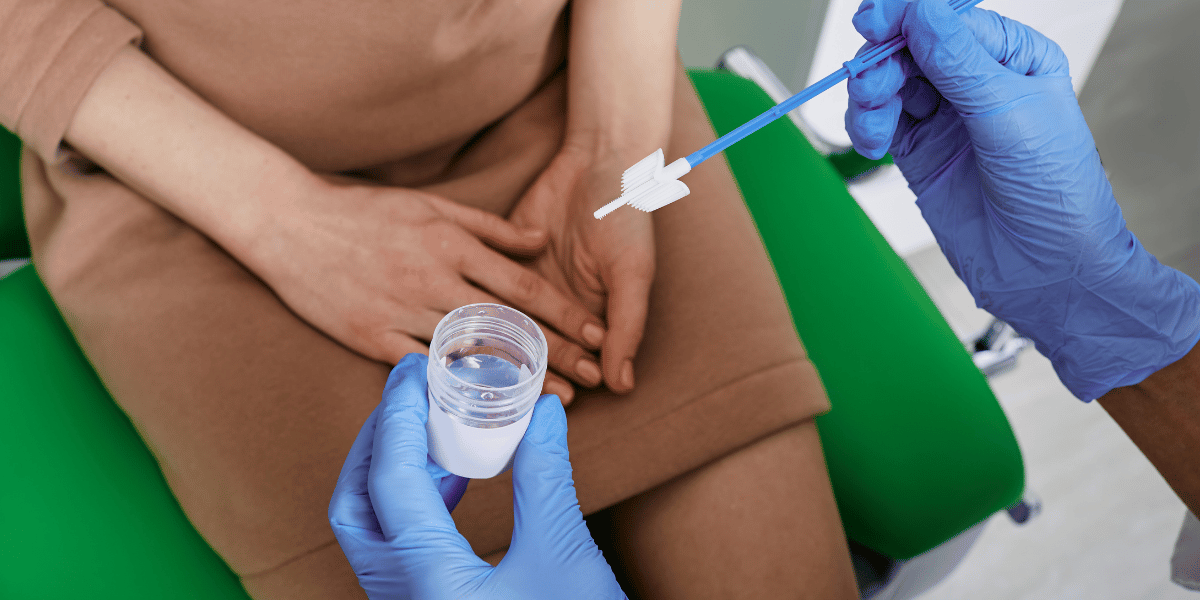
A swap is used to collect a sample of tissues within the vagina and cervix. That swap is then examined under a microscope to evaluate the cells and detect any abnormalities, like precancerous cells. This is an early warning sign that saves lives, and patients can start intervention treatments right away.
Generally, the rule is that you should have a pap smear test every three year if you are between the ages of twenty-one and twenty-nine. Women aged 30 to 65 years may choose to have one done every three years. However, if your health insurance allows for annual women’s health screenings, take advantage of the free annual exam.
Scheduling a Punch Biopsy
There are some cells that cannot be detected by a pap smear because the mutated cells (the early warning sign of potential cancer risks) lay below the service. If you have a history of cancer in your family, you may want to schedule a punch biopsy procedure every three years.
This procedure involves some local anesthetic, and a device is inserted to collect something similar to a core sample. There can be some mild discomfort and cramping after the procedure, but the information it provides can further protect your health. The sample includes several layers of tissue and is the most concise detection method for precancerous or cancer cells.
Getting Tested Regularly for HPV
One of the most important things to remember is that you can have HPV without noticing any symptoms. Some types of HPV can cause genital warts that are highly visible (and contagious), but HPV can go undetected for years if you are not getting tested for it, and other STDs on a regular basis.
Should you still get tested annually if you are in a monogamous relationship? Or if you are not sexually active? Some may believe that sex is the only way you can get HPV, and it is the most common method of contracting it.
However, you can also get it from gyms, swimming pools, and other environments. In fact, you can touch a surface infected with HPV and spread it through self-inoculation (hand contact with another part of your body). Avoid sharing towels and personal items (bathing suits, etc) that present the highest risk of non-sexual skin-to-skin contact.
The good news is that if you are getting an annual exam and pap smear, your doctor will also order an HPV screening at the same time. The collected cervical cells are examined under a microscope to detect the presence of HPV, the leading cause of reproductive cancers.
How Can Medical Cannabis and CBD Help?
More research is needed to understand how cannabinoids may help patients undergoing cancer treatment. Studies are being conducted to explain how THC and cannabidiol (CBD) may actually help protect the body against carcinomas.
Some studies have suggested that cannabis has apoptosis and antiproliferative effects. In plain terms, THC and CBD may help trigger cell death in cancer cells. The ability of cannabidiol (CBD) to reduce inflammation is also being studied as part of preventative care for people who are at a higher risk of developing cancer in the cervix, breast cancer, colon cancer, and more.

With over 25 years of specialty training in Internal Medicine, as well as fellowship training in Functional and Sexual medicine, Dr. Maginso added Plant Medicine (Medical Marijuana) to her niche practice as of 2017. She is licensed in the State of Florida and attended the University of the East (UERM) in Quezon City, Philippines as well as the University of Medicine and Dentistry in Newark, NJ.
She joined DocMJ in 2019 to align with a known group of compassionate physicians that empower their patients to be better versions of themselves. Her favorite hashtag is #powerpassionperformance, using the combination of optimized bioidentical hormones, medical marijuana, plasma therapies, and sexual wellness.
She is an author, speaker and community advocate for Medical Marijuana, Sexual Health, and the empowerment of mature women.