

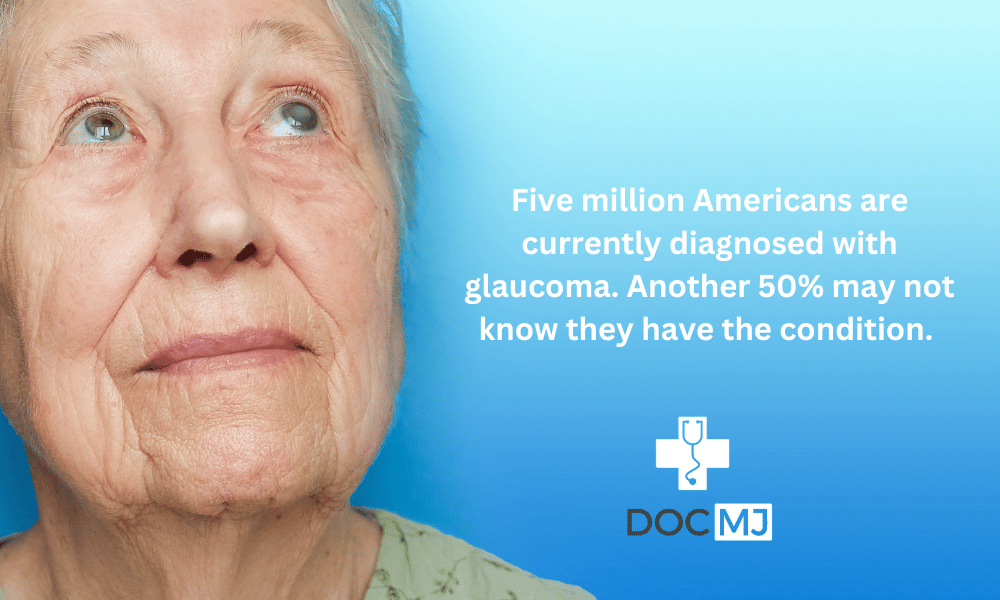
It is National Glaucoma Month and a good time to have a conversation about eye health. According to the Centers for Disease Control and Prevention, more than 50% of people who have glaucoma do not even realize they have the condition.
The earliest stages of glaucoma can be asymptomatic. The best prevention is to make sure you schedule an eye examination every year with an “eye pressure” diagnostic test called Tonometry. It is something not included in a regular ophthalmologist appointment, but it can help you diagnose the earliest signs of glaucoma.
More than five million Americans are currently diagnosed with glaucoma and navigating the symptoms associated with the condition. Find out why glaucoma is often a qualifying health condition that can make patients eligible to apply for a medical cannabis card and how cannabinoids may help.
What is Glaucoma?
Glaucoma is not one condition but a series of different changes to the eye(s) that can cause damage and vision loss. There are many different types of glaucoma that all contribute to progressive vision loss if not medically treated.
The eight different types of glaucoma are:
Open-Angle Glaucoma
This type is the most common diagnosis among patients worldwide, and it is sometimes referred to as Primary Open Angle Glaucoma. For patients, Open-Angle Glaucoma occurs when the drainage angle of the eye is unobstructed, but the fluid does not drain properly. This causes an increase in pressure that causes significant optic nerve damage.
Angle-Closure Glaucoma
There is a process in the human eye that allows drainage of excess fluid. When the drainage angle of the eye becomes locked, eye pressure increases. This type of glaucoma can result in rapid vision loss.
Normal-Tension Glaucoma
A type of glaucoma where optic nerve damage occurs, but there is a normal eye pressure of 12 to 22 millimeters of mercury (mmHg). Researchers are not sure why this type of glaucoma can occur, but it is believed to be related to poor blood flow in the optic nerve.
People who develop Normal-Tension Glaucoma may have a history of migraines, hereditary prevalence of the condition, or cardiovascular problems.
Congenital Glaucoma
This type of glaucoma is present at birth and usually relates to problems with the natural drainage system in the eye(s). People born with Congenital Glaucoma may experience frequent tearing and also sensitivity to light.
Secondary Glaucoma
If you sustain an injury to your eye, you may develop Secondary Glaucoma. This condition occurs in conjunction with other health conditions as well, including Diabetes or tumors in the eye. It may also be caused by inflammation or the prolonged use of corticosteroid medications (oral or eye drops).
Some people develop Secondary Glaucoma after undergoing surgery for cataracts or another type of invasive eye procedure. Persistent eye infections may also be a contributing cause of this type of glaucoma.
Pigmentary Glaucoma
Sometimes, the back surface of the iris can come into contact with the lens within the eye. That can happen during exercise, for example. The rubbing between the two eye structures causes granules of pigment to be released from the iris.
The iris pigment fragments can move into the fluid of the front part of the eye, called the aqueous humor. This can lead to damaging increases in intraocular pressure (IOP) as normal eye drainage pathways become blocked.
Exfoliative Glaucoma
A type of Secondary Open-Angle Glaucoma, Exfoliative Glaucoma, happens when there is a buildup of material on the lens of the eye and other structures within the anterior eye areas. The material appears white or gray in color, and it is made of fibrillar proteins.
Symptoms of blurred vision and delayed adjustment to changes in light and dark are common signs of this type of glaucoma. It is more common among adults aged sixty (60) years or older. The exfoliated matter caused problems in the trabecular meshwork areas of the eye, which are essential for fluid drainage.
Traumatic Glaucoma
This type of glaucoma is caused exclusively by an eye injury or head trauma and is categorized as a Secondary Glaucoma. Blunt trauma to the eye area caused by impact, penetration of foreign objects entering the eye, or other injuries can cause Traumatic Glaucoma.
Some of the initial symptoms of Traumatic Glaucoma are visually noticeable, such as redness or a change in the appearance of the eye. People who sustain an injury to the eye may also notice chronic pain and blurred vision.
The Four Stages of Glaucoma
When someone develops glaucoma, the early stage is unnoticeable, and many patients do not seek medical advice until the disease has advanced to Stage 3 when significant visual problems begin to occur.
However, glaucoma is a progressive disease, and there are four stages with varying degrees of symptoms:
Stage One
The first state of glaucoma may not present with any noticeable symptoms. As discussed, many people may have glaucoma and not realize it, which delays treatment and medical care. The only way to determine if you are in the first stage of glaucoma is through a professional eye exam.
Stage Two
The signs of Stage Two progression of glaucoma are also subtle. However, patients may notice a slow loss of peripheral vision. Focusing on objects that are not directly in front of the visual range (but rather on the sides) may cause blurred vision. It can also become difficult to see colors or objects moving in the peripheral vision range at this stage.
Stage Three
At this stage of the progression of glaucoma, patients seek medical help. That is because the optic nerve damage (caused by high intraocular pressure) creates visual impairment. Optic nerve damage disrupts the transmission of visual information from the eyes to the human brain. Visual field defects and partial vision loss are common in Stage Three of glaucoma.
Stage Four
By the time a patient has progressed to Stage Four of advanced glaucoma, the elevated intraocular pressure has done irreversible damage to vision with severe impairment. IOP-lowering effects through prescription medications can slow down the progression of glaucoma and help reduce ocular hypertension but does not cure the condition.
The adverse effects of Stage Four glaucoma often include moderate to severe headaches and partial to complete vision loss in the eye that is affected. Sometimes, patients can develop glaucoma in both eyes, and it may progress at different rates, depending on the damage caused by elevated pressure.
Risk Factors That Can Contribute to Glaucoma
When it comes to increased risk factors for developing glaucoma, age is a leading cause. People who are sixty years of age or older are more likely to develop glaucoma. However, the disease can present at any age, particularly if related to an injury or trauma.
Statistically, glaucoma is more prevalent in some ethnic groups, including those of African or Asian descent. Black and brown Americans are more likely to develop Primary Open Angle Glaucoma, while Asian Americans are prone to a diagnosis of Angle Closure Glaucoma.
Unsurprisingly, family history also plays a part. If you have one more family member who was diagnosed with glaucoma, you have a statistically higher risk of developing the condition. Individuals with thin cornea tissues also have a higher risk; that can be an inherited physical trait.
People diagnosed with chronic diseases, including Diabetes, COPD, and other cardiovascular issues, may have a higher risk of developing glaucoma. Any medical condition that can affect the normal flow of blood to the optic nerve has the potential to influence the development of glaucoma.
Other risk factors include the long-term use of corticosteroid medications (like eye drops), previous injury to one or both eyes and nearsightedness or Myopia. Nearsighted people may have a higher risk of developing glaucoma because Myopia can cause optic disc cupping and optic nerve head changes that may contribute to certain types of glaucoma.
Common Symptoms That Glaucoma Patients Experience
It is important to remember that in the earliest stages of glaucoma, there may be no signs or symptoms you may notice. This is why monitoring for glaucoma symptoms is not enough. Patients should schedule an annual eye examination as early as possible to detect any potential problems with eye pressure.
After Stage One of glaucoma, some of the symptoms can be noticeable. Here are the most common symptoms that glaucoma patients experience:
Increased Intraocular Pressure
When glaucoma occurs, the pressure within the eye continues to build, specifically in the fluid area between the cornea and lens, called the anterior chamber. Glaucoma is often referred to as the “silent thief of sight” because as the pressure increases, the patient may not feel anything at all, while significant damage occurs.
Gradual Peripheral Vision Loss
One small sign or symptom that Glaucoma patients may notice in the earliest stages is a small reduction in their peripheral vision. As the condition advances, peripheral vision continues to deteriorate, which is often the first time that patients may seek the advice of a physician and receive a diagnosis of glaucoma.
Blurred Vision
As the optic nerve damage becomes more severe, visual acuity is compromised. Patients can experience blurred vision, but not everyone diagnosed with glaucoma has this symptom immediately. It can progress quickly or be slow to develop.
When symptoms of blurred vision do occur, it has a substantial impact on activities of daily living, including work, driving, and self-care.
Halos Around Lights
Have you ever heard that people with glaucoma can sometimes see halos? Glaucoma can cause the visual perception of rings of light or halos around certain objects in low-light conditions. This is caused by optic nerve damage that impairs light sensitivity.
Severe Eye Pain and Headache
Persistent moderate to severe headaches can be a warning sign of glaucoma. The symptoms can present as overall headaches or specific intense eye pain. If you experience this symptom, seek emergency medical attention.
In acute cases, individuals may experience intense eye pain and headaches. This is a medical emergency requiring immediate attention. It may indicate a serious condition called an Acute acute-Angle-Closure Glaucoma attack.
Nausea and Vomiting
Changes to your vision can cause nausea. Just think about how many times you may have experienced motion sickness because you were reading while riding in a car or on a train. Anytime there is a negative change to intraocular pressure, it can cause nausea and vomiting.

How Do You Medically Treat Glaucoma?
Glaucoma patients may be prescribed eye drops and oral medications to help reduce intraocular pressure (IOP) in the eyes during all stages of glaucoma. When eye pressure is well controlled, it can reduce the speed with which eye damage and vision loss can occur.
One early-stage glaucoma treatment is called Minimally Invasive Glaucoma Surgery (MIGS). This surgery is conducted to help improve the drainage of fluid from the eye(s) without disrupting surrounding tissues.
Laser treatment, including Laser Trabeculoplasty) addresses drainage issues in the eye. This treatment option is available after oral or eye drop medications have become ineffective in normalizing eye pressure. Another procedure called a Trabeculectomy can be conducted to build a new drainage channel to help lower eye pressure caused by fluid buildup.
Using Medical Cannabis for Glaucoma Symptom Relief
There are no clinical studies that suggest cannabinoids can cure glaucoma. But like many other medical conditions, glaucoma patients may find it helps provide some relief from common symptoms like pain and nausea.
Some studies have reported that tetrahydrocannabinol (THC) may have a positive effect by lowering intraocular pressure. This may be due to the relaxation of blood vessels after cannabis is consumed, and the effects can last for several hours. If it helps lower intraocular pressure, cannabis may help slow down the progression of glaucoma and vision impairment.
Because of the research findings, many states have included glaucoma as a qualifying health condition for medical cannabis. Patients are required to have a formal diagnosis of glaucoma to be eligible to apply for a medical marijuana card.
Cannabis products can temporarily increase blood pressure, which is why it is important to discuss your glaucoma symptoms with a qualified healthcare provider. Explore whether medical cannabis can help you manage symptoms of glaucoma by scheduling a medcard appointment with DocMJ.

Dr. Glider is a board certified Internal Medicine Specialist. He received his Florida Medical Marijuana Physicians Certification in 2017 and was one of the first recommending physicians with DocMJ. In addition to medical marijuana recommendations, Dr. Glider continues to practice Internal and Geriatric Medicine in private practice. Additionally, he serves as Medical Director for a home health company, supervising and educating staff, as well as supervising an advanced Registered Nurse Practitioners for a transitional care program.
Dr. Glider graduated from the College of Osteopathic Medicine & Surgery in Des Moines, IA and completed his residency at Saddlebrook General Hospital in Saddlebrook, NJ. He has received several honors and awards throughout his professional career, including a City of Des Moines Merit Award and a Chamber of Commerce Award (Port St. Lucie, FL). Dr. Glider is an experienced and caring physician who is loved and respected by his peers and his patients.