

As the discourse surrounding mental health advances, recent findings from a DocMJ survey provide deep insight into how patients utilize medical marijuana to manage various mental health conditions, including anxiety, PTSD, and depression. The survey sheds light on the efficacy of cannabis in these contexts and the social perceptions that influence its acceptance.
Key Findings
The survey highlighted several significant points regarding the application of medical marijuana in treating mental health disorders. These insights not only reflect patient experiences but also contribute to the broader understanding of cannabis as a treatment option in mental health care.
Mental Health Conditions Managed with Medical Marijuana
The survey revealed that anxiety, stress, PTSD, and depression emerged as the predominant conditions managed by medical marijuana users. These findings corroborate existing literature that indicates a growing trend of individuals resorting to cannabis to alleviate symptoms related to stress and mental health challenges.
This also suggests that medical marijuana is a significant adjunct therapy for patients who found that traditional treatments didn’t work.
High Satisfaction with Medical Marijuana as Treatment
Perhaps the most striking revelation from the survey was the overwhelming satisfaction reported by patients. On a scale from 1 to 10, the average satisfaction score hovered around an impressive 9, indicating that a substantial majority of users perceive cannabis as a highly effective treatment modality.
This level of contentment not only reflects individual success stories but also the potential of medical marijuana to improve the overall quality of life for those with mental health issues.
Social Stigma: A Lingering Issue
Despite the favorable outcomes associated with medical marijuana use, the survey highlighted an unfortunate and significant obstacle: social stigma. Many respondents admitted that they experienced some level of stigma—mild to moderate—around using cannabis for mental health.
This stigma is a major barrier to patients considering medical marijuana as an option. The findings also stress the need for us to keep advocating and educating people about medical marijuana and normalizing its usage in mental health care.
A Willingness to Share Their Experience With Medical Marijuana
An intriguing aspect of the survey was the willingness of most patients to share their experiences with medical marijuana. While some chose to remain anonymous, most wanted to share their story. This reflects a growing sense of community among users.
Sharing reflects not only a desire to spread awareness but also to support others who may be considering the same treatment. The collective voices of these patients can be a powerful force for change to educate and accept medical marijuana as a treatment option.
Visualizations
The survey results can be seen in the visualizations that show the distribution of mental health conditions treated with medical marijuana, social stigma, and patients willing to share their stories. These visuals can help explain the complexity and reality of using cannabis for mental health.
Distribution of Mental Health Conditions Managed with Medical Marijuana
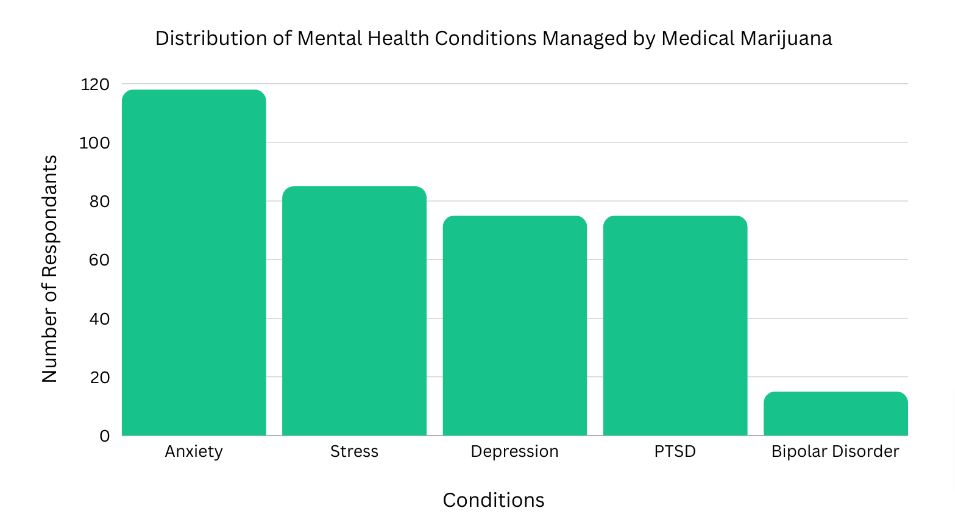
The visual representation of the conditions managed highlights the prevalence of anxiety, stress, PTSD, and depression among respondents. The graph gives us an immediate view of which conditions are most commonly treated with cannabis, emphasizing the importance of continued research and support in these areas.
Social Stigma
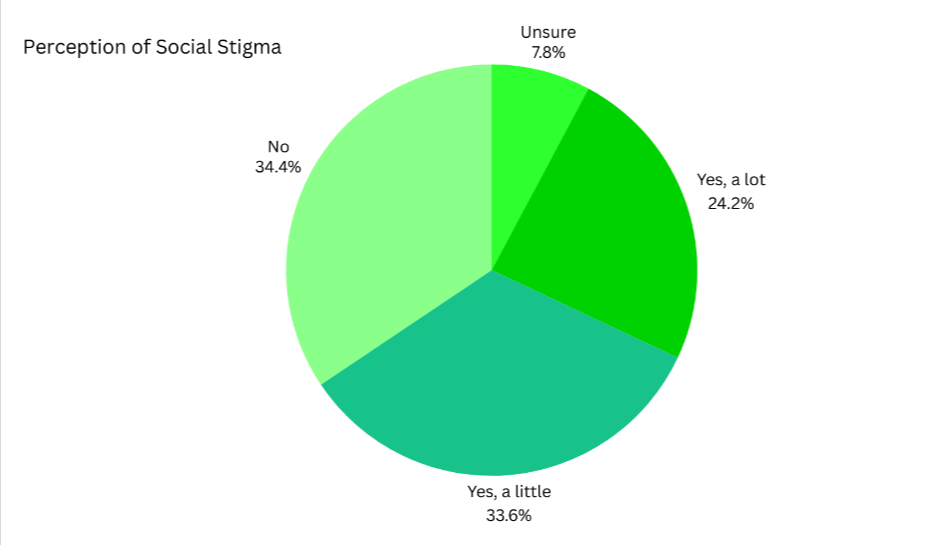
A pie chart of the social stigma patients experience helps to put into perspective the challenges of accepting medical marijuana. Understanding this stigma is important for healthcare providers and advocates to create a more patient-friendly environment.
Willingness to Share Stories
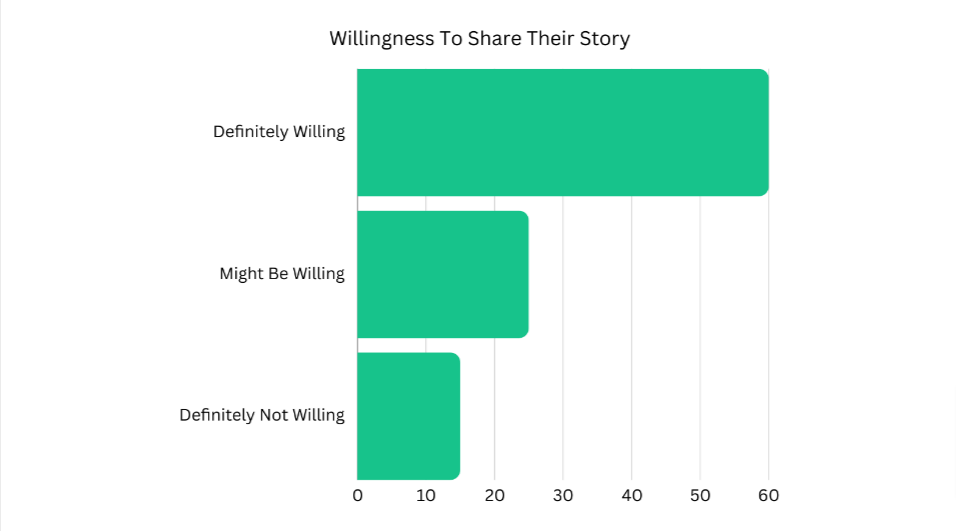
Visualizing the willingness to share personal narratives can underscore the communal aspect of patient experiences. This highlights the power of storytelling in mental health advocacy, so others can connect and relate to shared experiences.
Closing Remarks
The DocMJ survey reflects the multifaceted role of medical marijuana in managing mental health conditions, reflecting high patient satisfaction and highlighting the ongoing challenges posed by social stigma. As more people embark on their mental health journey, we need to advocate for more acceptance and understanding of cannabis as a treatment. The results also set the stage for future research and conversation in the ever-changing landscape of mental health treatment.
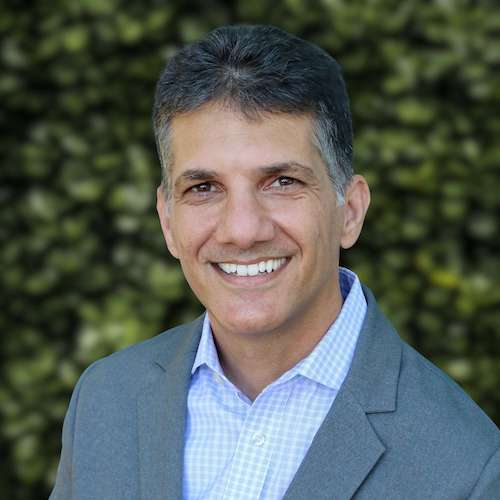
Aaron Bloom, an experienced healthcare attorney, serves as the CEO of DocMJ and Medwell Health and Wellness Centers, where he has overseen the organizations’ mission and growth since 2016. In addition to his leadership roles, Aaron serves on the Board of Directors for Waterfall Bank, bringing his expertise in healthcare, compliance, and strategic growth to the financial services sector.
Aaron’s passion for improving patients’ lives stems from more than 20 years of owning, operating, and representing traditional healthcare organizations. Throughout his career, he has remained committed to finding better ways to relieve suffering and expand access to innovative, patient-centered care. As CEO, Aaron works each day to help patients achieve better health and wellness through the therapeutic benefits of medical cannabis and other evidence-based alternative medicines.