
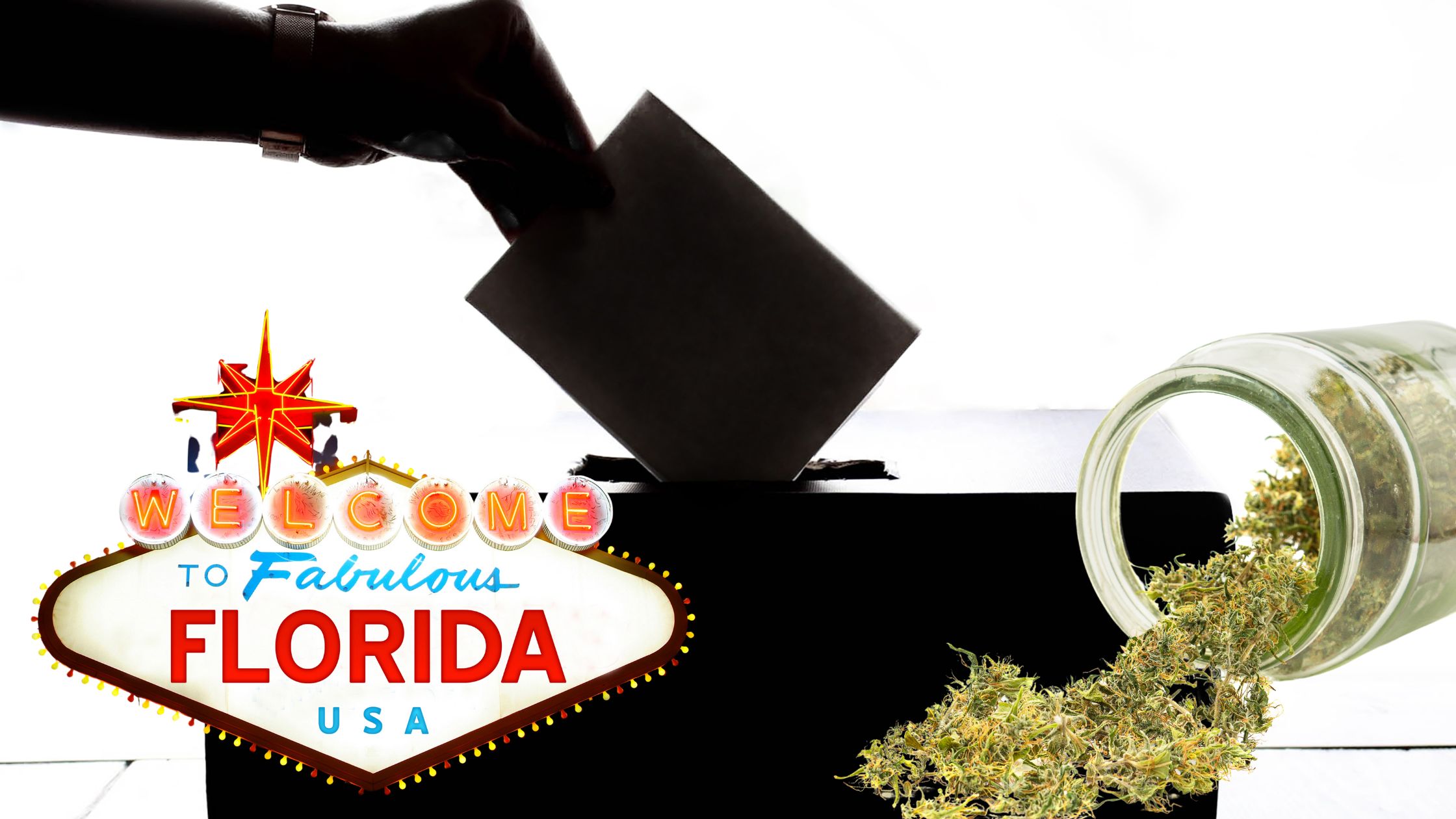
Florida is edging closer to placing recreational cannabis legalization on the November 2026 ballot. The state’s leading reform effort, Smart & Safe Florida, has now gathered nearly 70% of the required petition signatures, signaling strong momentum heading into the final months of its signature drive.
Current Progress
The campaign has collected over 613,000 validated signatures out of the 880,000 needed. Under Florida law, ballot initiatives must secure signatures equal to 8% of the last presidential election’s voter turnout, distributed across at least 14 of Florida’s 28 congressional districts. Three districts have already exceeded their quotas, and several others are nearing completion.
This signature count has triggered a mandatory judicial and fiscal review by the state, including an assessment by the Florida Supreme Court to ensure the amendment’s language meets constitutional requirements and an economic impact analysis by the Department of State.
Lessons from 2024
In 2024, a similar legalization amendment secured 56% voter support, falling short of Florida’s strict 60% supermajority requirement for constitutional amendments. Learning from that near-success, campaign organizers refined their proposal for 2026 to address concerns raised by policymakers and the court.
Notably, the new measure includes an explicit ban on public smoking or vaping of cannabis and requires the legislature to set regulations governing the time, place, and manner of consumption if passed. These additions aim to strengthen the amendment’s legal defensibility and clarify enforcement expectations for state agencies and local governments.
Political and Legal Hurdles
Governor Ron DeSantis has voiced skepticism about embedding recreational marijuana in the state constitution, suggesting it should be handled legislatively instead. Meanwhile, the legislature has passed additional restrictions on citizen initiatives, such as tighter deadlines for petition submission and stricter guidelines for petition gatherers. Advocacy groups argue these laws are intended to suppress grassroots-driven reforms, and legal challenges to these restrictions are ongoing.
Despite these challenges, the campaign remains confident. Recent polls suggest public support for adult-use cannabis continues to grow, with some surveys showing 67% voter backing. This, combined with a more targeted amendment strategy, gives supporters hope that the 60% threshold will be achieved in 2026.
What Would Recreational Legalization Mean for Medical Marijuana?
For Florida’s robust medical marijuana program, legalization of adult-use cannabis would bring both opportunities and adjustments.
First, medical marijuana patients would still maintain access to the current regulated system. Many patients may choose to remain under the medical program due to benefits such as lower taxes, physician oversight, and access to higher-potency products not permitted under recreational limits. Medical cardholders would likely continue to receive priority in dispensary lines and retain legal protections for using cannabis as part of their treatment plan.
However, recreational legalization would also impact the industry’s structure. Dispensaries would potentially serve a broader customer base, increasing sales volume and potentially leading to product shortages or supply chain strain if cultivation capacity is not expanded proportionally. This transition has been observed in states like Illinois and Arizona, where initial adult-use rollouts created temporary disruptions in medical supply.
From a regulatory perspective, the Department of Health’s Office of Medical Marijuana Use (OMMU) would continue overseeing medical certifications, while additional regulatory bodies may emerge to manage adult-use licensing, taxation, and retail compliance.
For physicians, patient education will become even more critical. Many patients may assume recreational products are interchangeable with medical formulations, but differences in cannabinoid ratios, dosing accuracy, and qualifying condition considerations will require clear guidance to prevent treatment gaps or ineffective symptom management.
Finally, the economic benefits of legalization could drive expanded research funding, new job opportunities, and broader public acceptance of cannabis as both a medical therapy and a regulated adult-use product.
The Road Ahead
The Smart & Safe Florida campaign is focusing on completing its signature collection by early 2026 to meet state deadlines. After validation, the Florida Supreme Court will issue its final ruling on whether the initiative can appear on the ballot.
If it clears all legal hurdles, the measure will go before voters in November 2026, requiring at least 60% approval to become law. Given the strong showing in 2024 and the current public support trends, this upcoming vote could be a defining moment for cannabis policy in Florida and the Southeast region.
Conclusion
Florida’s path to recreational marijuana legalization remains challenging but increasingly promising. For medical marijuana patients, providers, and the industry, adult-use legalization would create both benefits and operational shifts. The decision ultimately rests with Florida voters, who could soon join the growing list of states embracing comprehensive cannabis reform.
Aaron Bloom, an experienced healthcare attorney, serves as the CEO of DocMJ and Medwell Health and Wellness Centers, where he has overseen the organizations’ mission and growth since 2016. In addition to his leadership roles, Aaron serves on the Board of Directors for Waterfall Bank, bringing his expertise in healthcare, compliance, and strategic growth to the financial services sector.
Aaron’s passion for improving patients’ lives stems from more than 20 years of owning, operating, and representing traditional healthcare organizations. Throughout his career, he has remained committed to finding better ways to relieve suffering and expand access to innovative, patient-centered care. As CEO, Aaron works each day to help patients achieve better health and wellness through the therapeutic benefits of medical cannabis and other evidence-based alternative medicines.