
The 2024 Farm Bill Amendment may become the most highly disputed in recent history. Every four years, the Farm Bill expires, and lawmakers review it and determine what needs to change to support our agricultural industries.
The hemp industry has been a valuable part of the American economy since the Puritans brought hemp to New England in 1645 for spinning and weaving. Today, the most profitable hemp cultivation businesses in America are producing “intoxicating hemp products,” such as smokable hemp flower, infused hemp oils, and edibles.
In 2020, the sales of hemp-derived cannabinoids in the United States totaled $200.5 million. By 2023, according to data from the Brightfield Group, sales had increased by 1,283% to $2.8 billion. Some analysts predict that U.S. hemp industry revenues will reach almost $30B annually by 2030.
The 2024 Farm Bill Amendment is in the news (more than expected) mainly because of calls to correct the regulatory framework about intoxicating hemp products. If the federal law changes, it could remove all hemp-derived cannabinoids from your local smoke shop.
What Is The Farm Bill?
The history of the USA Farm Bill dates back to the early 20th century when it was first introduced to support American agriculture during the Great Depression. Initially known as the Agricultural Adjustment Act of 1933, it aimed to stabilize farm incomes and prices by controlling production through subsidies and price support.
Over the decades, the Farm Bill evolved in response to changing economic conditions, agricultural practices, and societal needs. It became a cornerstone of federal agricultural policy, encompassing various programs such as crop insurance, conservation initiatives, nutrition assistance, and regulations governing the hemp industry and all hemp-derived products.
Why Is The 2024 Farm Bill Amendment A Big Deal?
The U.S. Farm Bill undergoes updates periodically, typically every five years or so. This frequency allows lawmakers to adjust agricultural policies in response to changing economic conditions, technological advancements, and societal needs.
Each update reflects the agricultural sector’s current challenges, ranging from environmental sustainability to food security and international trade. These revisions ensure that the Farm Bill remains relevant and effective in supporting American farmers, promoting rural development, and addressing emerging issues such as climate change and the legalization of hemp-derived products.
Vague Legislation Led To An Explosion of Intoxicating Hemp Products
If you were a farmer or owned a business impacted by the Agriculture Improvement Act, you might have never heard of the legislation. But in 2018, The Farm Bill inadvertently legalized the psychoactive hemp products market in the United States.
Since cannabis was still a Schedule I prohibited substance, the poorly written amendment in 2018 flooded the American marketplace with highly psychoactive drugs. Instead of limiting sales to licensed dispensaries, these products showed up everywhere, from local convenience stores to tobacco and vape shops.
The intention was to legalize cannabidiol (CBD) products that had 0.30% THC or less in terms of potency. Cannabidiol is non-psychoactive; you cannot become impaired by taking CBD alone. The 2018 Farm Bill gave the American hemp industry a significant boost, but not in the way the federal government wanted.
Since then, hemp-derived cannabinoids have created new public health, consumer safety, and regulatory problems. It has forced some states to put an outright ban on any hemp-derived cannabinoids with more than 0.30% THC, while other states continue to struggle to regulate them.
What Are Hemp Derived Intoxicating Cannabinoids?
Cannabidiol (CBD) must be 0.30% THC or less to be classified as a federally legal product. The laws that have established CBD products are safe to travel with, order online, mail, etc, are based on that strict criteria.
But when it comes to alternative hemp-derived cannabinoids, the THC limit is virtually ignored. Again, thanks to the vague 2018 Farm Bill language that inadvertently (and temporarily) legalized all hemp-derived cannabinoids without the stipulation about potency.
How big is the problem? Pop into a local vape, tobacco shop, or convenience store, and you will see how few of the products actually have a 0.30% THC limit. What was meant to be legalized was non-intoxicating hemp-derived products.
However, the legal gray area has allowed highly intoxicating hemp cannabinoid products to be sold to anyone over the age of twenty-one years. In some states, the minimum age to purchase these products is as low as eighteen.
Delta-THC
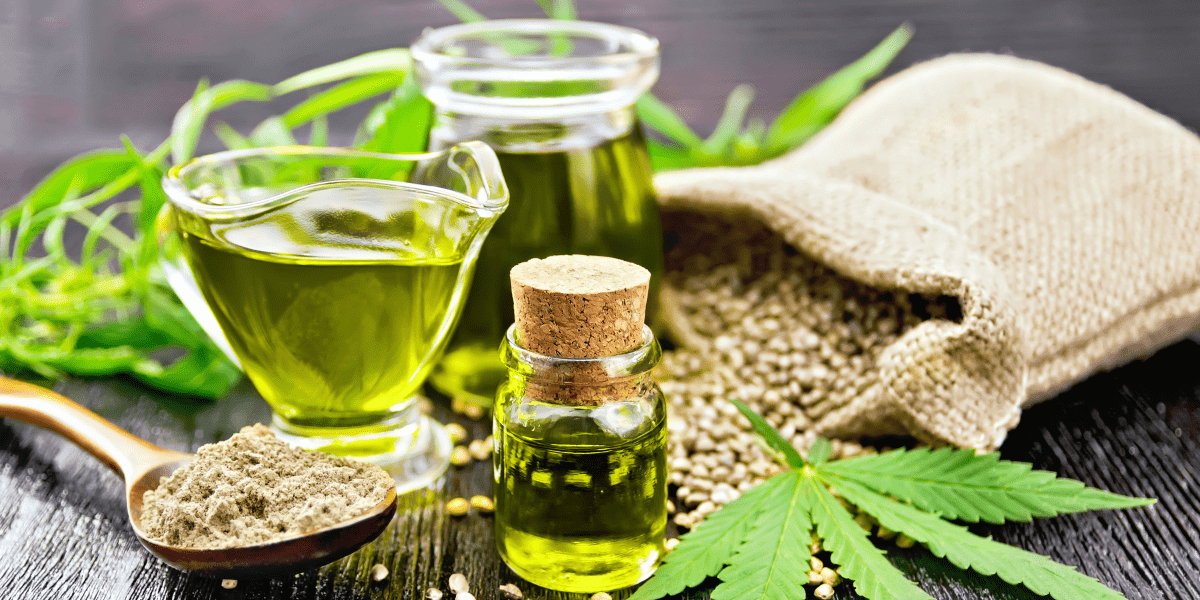
Delta-THC products, including Delta-8 and Delta-10, are cannabinoids derived from hemp. These compounds offer milder psychoactive effects compared to Delta-9 THC, the primary intoxicating component in cannabis.
Delta-THC products are typically manufactured through a chemical process that converts CBD (cannabidiol) extracted from hemp into Delta-8 or Delta-10 THC. This process involves isomerization, which alters the molecular structure.
The average potency of Delta-THC products sold in the United States varies, with most products ranging from 10 mg to 40 mg per serving. However, because these products are not regulated by the Food and Drug Administration (FDA), it is not uncommon to find products that exceed 100mg per dose.
Delta-THC products are available in various forms, including edibles, tinctures, vapes, and gummies. They are commonly found at convenience stores and tobacco or vape shops.
Kratom
Kratom products are derived from the leaves of the Mitragyna speciosa tree, native to Southeast Asia. Known for their stimulant and sedative effects, Kratom leaves are traditionally chewed, brewed into tea, or ground into powder. Modern Kratom products include capsules, extracts, and tinctures.
The production process involves harvesting the leaves, drying them, and grinding them into a fine powder or extracting their active alkaloids. Kratom products’ average potency varies widely, with standard doses ranging from 2 to 6 grams per serving. The primary active compounds, mitragynine and 7-hydroxy mitragynine determine the strength and effects of the product.
THCA
THCA (tetrahydrocannabinolic acid) products are derived from raw hemp plants and are nonintoxicating. THCA is the precursor to THC, the psychoactive compound in cannabis, and only converts to THC when exposed to heat (decarboxylation).
These products are made by extracting THCA from hemp flowers using methods like CO2 extraction or ethanol extraction, ensuring no heat is applied during the process to maintain the compound’s acidic form. THCA products come in various forms, such as tinctures, capsules, and topicals.
The average THC potency in THCA products are intended to be very low, often less than 0.3%, ensuring they remain non-psychoactive and legal under federal law. However, you can easily find THCA gummies that average around 50mg of THC per serving.
HHC
HHC (tetrahydrocannabinol) is a semi-synthetic cannabinoid derived from hemp. It is created by hydrogenating THC molecules, which involves adding hydrogen atoms to the compound, stabilizing its structure. This process is similar to turning vegetable oil into margarine. HHC is known for producing effects similar to THC but with a longer shelf life and potentially different psychoactive properties.
Products with HHC, such as edibles, vapes, and tinctures, have varied potency. The average HHC potency ranges from 15 to 30 mg per serving, which can vary depending on the product and manufacturer. HHC offers an alternative to traditional THC with unique benefits and legal considerations.
Why Are Intoxicating Hemp Products a Problem?
Many Americans (particularly those living in states where medical or recreational marijuana use is banned) are asking questions about Delta-THC and other hemp-derived cannabinoids. If cannabis is illegal (because it is intoxicating and a controlled substance), why are these products readily available?
Permission to sell psychoactive hemp products was never supposed to happen. It was a classic example of a misfire of the legislative process. The hemp industry wanted to grow and expand; the administration didn’t do its homework when reviewing the proposed amendment in 2018.
The open-ended amendment in 2018 did not specify what type of hemp-derived products (specifically intoxicating potencies) should be banned. And that resulted in a big problem.
You see, cannabis products are highly regulated for a reason. While cannabis remains a Schedule I prohibited substance at the federal level (which could change soon), businesses must be licensed to sell those products.
Delta and Synthetic THC Goods Are Unregulated Products
If you think getting a license to cultivate, process, manufacture, and sell federally banned products is easy, guess again. Some states have a lottery system, and many companies waited years for a license. Unsurprisingly, start-up costs are prohibitive for cannabis-related businesses (CRBs). Hemp and marijuana industries are at odds because of the low barrier to entry for intoxicating hemp products.
State laws regulate the sale of cannabis because it is an intoxicating substance. Now, hemp-derived cannabinoids with high THC potency are widely available. To anyone over 18-21 years old, depending on state laws. That makes a lot of people concerned about the potential long-term effects on public health and safety.
What many lawmakers want to see is an end to the legal and unregulated status of hemp-derived cannabinoids that have intoxicating cannabinoids.
What Are Synthetic Cannabinoids?
Synthetic cannabinoids are artificial chemicals that mimic the effects of naturally occurring cannabinoids found in cannabis plants. The first synthetic cannabinoid, a compound known as JWH-018, was created in the early 1990s by Dr. John W. Huffman at Clemson University for research purposes. These synthetic cannabinoids are often sprayed onto plant material and marketed as legal alternatives to marijuana, but their safety and efficacy are significantly different.
To produce hemp-derived intoxicating products with higher potency, cannabinoids are first extracted from hemp fibers using solvents like ethanol or CO2. The extracted cannabinoids are then purified and processed to isolate compounds such as CBD. To increase the THC content, additional synthetic THC can be added, or the extracted CBD can be chemically converted into THC through a process called isomerization. This involves altering the molecular structure of CBD using acids and solvents to produce delta-8 or delta-9 THC.
However, the chemicals used in these processes can pose serious health risks. Solvents like butane or hexane and acids like hydrochloric acid can leave toxic residues if not adequately removed. These substances can cause respiratory issues, neurological damage, and other severe health problems if inhaled or ingested.
Synthetic cannabinoids themselves are associated with unpredictable and dangerous side effects, including seizures, psychosis, and life-threatening adverse effects, making them a significant public health concern. The 2018 Farm Bill inadvertently legalized products not established as safe for regular consumption.
What Could Change With 2024 Farm Bill Amendment?
The United States House of Representatives Committee on Agriculture completed the markup of the Farm, Food, and National Security Act of 2024 (Farm Bill) on May 24, 2024. The proposed legislation was passed with a 33-21 vote.
The 2018 Farm Bill was scheduled to expire on September 30, 2023, but it was extended for another year. Congress has until September 30, 2024, to sign the new bill, or it will extended once more to September 30, 2025.
The current version of The Farm Bill changed the federal legalization of hemp-derived products to exclude intoxicating hemp. That means any smokable hemp, vape oil, capsules, tablets, or edibles that have enough THC (or synthetic THC) content to cause impairment would no longer be legal to purchase, possess, manufacture, or sell.
No Desire To Legalize Synthetic THC
The estimated value of the intoxicating hemp products market is currently estimated at $28B. An amendment offered by Rep. Mary Miller (R-Illinois) proposed to change the definition of hemp to products that include “only naturally occurring or derived and nonintoxicating cannabinoids.” That would include all product derivatives and seeds with 0.30% THC content, or THCA, on a dry-weight basis.
The legislation will remove many hemp-derived products from retail shelves nationwide. Naturally, the hemp industry has been fighting this change. The multi-billion dollar industry that has grown through a landslide of retail sales could be over once the Farm, Food, and National Security Act of 2024 is signed.
Cannabis plant-derived cannabinoids would remain within the regulatory framework of state-legal marijuana markets for medical or adult use (recreational). Licensed dispensaries (unlike hemp-derived THC product manufacturers) are subject to stringent quality control standards, including batch tracking and third-party laboratory testing to ensure product safety.
Currently, the hemp and marijuana industries are not held to the same quality assurance requirements by law. Hemp plant material and cannabinoids remain the baseline source of the products; however, ingestible hemp products are mixed with chemically derived cannabinoids to increase the potency to intoxicating levels.

Aaron Bloom, an experienced healthcare attorney, serves as the CEO of DocMJ and Medwell Health and Wellness Centers, where he has overseen the organizations’ mission and growth since 2016. In addition to his leadership roles, Aaron serves on the Board of Directors for Waterfall Bank, bringing his expertise in healthcare, compliance, and strategic growth to the financial services sector.
Aaron’s passion for improving patients’ lives stems from more than 20 years of owning, operating, and representing traditional healthcare organizations. Throughout his career, he has remained committed to finding better ways to relieve suffering and expand access to innovative, patient-centered care. As CEO, Aaron works each day to help patients achieve better health and wellness through the therapeutic benefits of medical cannabis and other evidence-based alternative medicines.