
You probably have heard about cannabinoids in cannabis, but fewer people know that your body already produces its own cannabinoid signals through an endogenous cannabinoid system (ECS).
This internal network is a widespread biological system that interacts with the brain and nervous system. It plays a role in regulating how your brain, immune system, and many organs respond to stress and activity.
Scientists continue to study it because it influences several important body functions. This helps explain why some patients seek a medical marijuana card to access cannabis for its potential therapeutic benefits.
Understanding how this receptor system works helps you see why cannabinoids from the cannabis plant can affect mood, pain, appetite, and other processes while also offering possible therapeutic benefits.
What the Endocannabinoid System Is
The ECS is a system found throughout your body that helps coordinate activity across the central nervous system, the peripheral nervous system, and many peripheral organs.
It helps regulate communication between nerve cells, allowing different systems to maintain stability during stress or activity. Researchers discovered it while studying how cannabis interacts with the human brain and nervous system.
This system exists in the brain, spinal cord, spinal nerve pathways, immune cells and tissues, digestive organs, including the gastrointestinal tract, and many other organs. Its role is not to create new signals but to adjust existing ones when they become too strong or prolonged.
You can think of the ECS as a regulatory network that helps regulate balance across several potential functions, including:
- Pain perception and pain modulation
- Appetite, digestion, and food intake
- Mood and emotional response
- Immune activity and immune function
- Memory and learning
Instead of working continuously, the ECS activates only when cells detect a need to adjust signaling levels.
Why Scientists Discovered the Endocannabinoid System While Studying Cannabis
Researchers did not begin by searching for the ECS itself. They first studied how cannabis compounds interact with the brain. In the late twentieth century, scientists identified specialized cannabinoid receptors, also known as endocannabinoid receptors, that respond to THC, the primary psychoactive compound in cannabis.
This discovery raised an important question. If the body contains receptors designed to detect cannabinoids, it likely produces its own cannabinoids. Further research confirmed this idea. Scientists discovered natural compounds in the body known as endocannabinoids, produced by cells as needed. These signaling molecules are endogenous cannabinoids derived from lipid molecules. The two main endocannabinoids are anandamide and 2 ag, and the first endocannabinoid discovered was anandamide.
This finding revealed that cannabis introduces exogenous cannabinoids that interact with a biological network already present in the body.
This discovery shifted scientific thinking. Cannabis did not create a unique effect. Instead, plant cannabinoids interact with a regulatory system that normally helps control many physiological processes.
Why the Body Needs the Endocannabinoid System
Your body constantly works to maintain internal balance. This balance allows organs and cells to function properly even when conditions change.
Cells communicate through chemical signals, especially in the brain and nervous system. Sometimes these signals become excessive during stress, injury, or intense brain activity. When that happens, cells need a way to slow down the communication process.
The ECS performs that role. It detects when certain signals become too strong and triggers endocannabinoid production, allowing regulatory molecules to be released.
This process helps stabilize many biological systems, including:
- Neural communication in the brain
- Inflammatory and immune response regulation
- Hormonal signaling during stress response
Instead of producing constant activity, the ECS responds only when needed. This targeted response helps prevent excessive signaling that could disrupt normal body function.
The Three Core Parts of the Endocannabinoid System
The ECS operates through three key biological components. Each part performs a specific role in controlling cellular communication.
1. Endocannabinoids: The Body’s Cannabinoid Molecules
Endocannabinoids are molecules your body produces naturally as part of the ECS system. The most studied compounds are anandamide and 2 ag. Anandamide levels influence mood and neural signaling.
These molecules are produced only when cellular demand arises, meaning endocannabinoids are not stored.
Once produced, these molecules travel across the synapse and bind to endocannabinoid receptors on nearby cells. This binding influences neurotransmitter release, helping regulate the strength of neuronal communication.
2. Cannabinoid Receptors: Where ECS Signals Are Received
Cannabinoid receptors are proteins located on the surface of many cells. These receptors detect endocannabinoid molecules and trigger responses inside the cell.
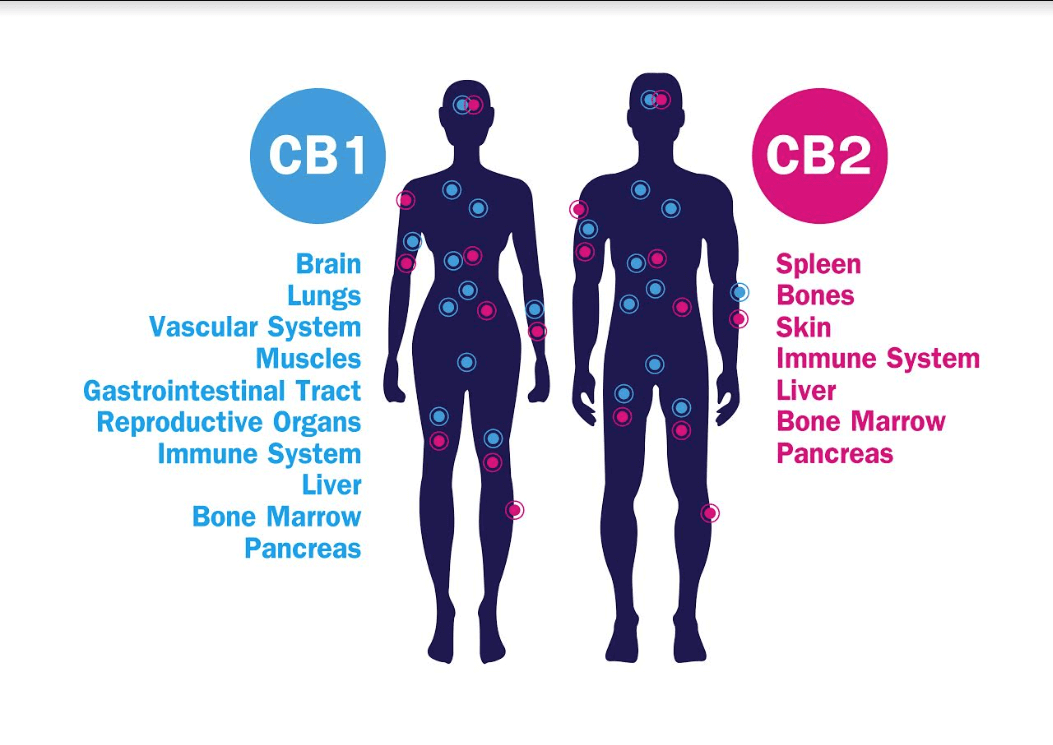
Scientists have identified two primary cannabinoid receptors: CB1 and CB2.
CB1 receptors are mainly found in the brain, including the nucleus accumbens, and throughout the central nervous system.
CB2 receptors appear primarily in immune cells, tissues of the immune system, and other peripheral organs.
When an endocannabinoid binds to these receptors, it can influence ion flow by regulating calcium and potassium channels, thereby altering how neurons communicate.
In the brain, this action often slows neurotransmitter release, which contributes to pain control and may relieve pain by reducing excessive neural signaling.
3. Enzymes: How ECS Signals Are Turned Off
Endocannabinoid signals must remain temporary. If the molecules remained active for too long, they could disrupt important cellular communication.
Specialized enzymes responsible for degrading the signal terminate it. The main enzymes involved include fatty acid amide hydrolase, which breaks down anandamide, and another enzyme that degrades 2 ag.
Because of this enzyme activity, ECS signals appear briefly and disappear once balance returns.
How the Endocannabinoid System Actually Works
The ECS operates through a process called retrograde signaling.
- A neuron becomes highly active and releases neurotransmitters.
- The receiving neuron detects excessive stimulation.
- The receiving neuron creates endocannabinoids through rapid lipid synthesis.
- These molecules travel backward across the synapse.
- CB1 receptors reduce further neurotransmitter release
This backward signaling slows down communication between neurons. By limiting neurotransmitter release, the ECS prevents signals from becoming too strong or lasting too long.
Once the adjustment occurs, enzymes break down the molecules and signaling ends.
What Processes Does the Endocannabinoid System Help Regulate
Because cannabinoid receptors appear in many tissues, the ECS influences a wide range of physiological processes. The ECS plays a key role in maintaining balance across multiple systems.
In the nervous system, ECS activity can influence how neurons transmit pain signals. When endocannabinoids activate CB1 receptors, they can modify neural signaling involved in pain perception.
In digestive tissues and the gastrointestinal tract, ECS activity can influence appetite and energy balance, affecting hunger signals and food intake.
The ECS also affects immune function by regulating immune cell and tissue activity, shaping the body’s response to inflammation.
Researchers also study how ECS activity influences emotional processing, learning and memory, and responses to stress.
Why Cannabis Affects the Endocannabinoid System
Cannabis contains compounds known as phytocannabinoids. These molecules resemble the endogenous cannabinoid molecules the body naturally produces.
When these compounds enter the body, they interact with cannabinoid receptors in the ECS.
THC binds strongly to CB1 receptors, which can influence mood, perception, and coordination.
CBD interacts differently. Research shows CBD interacts indirectly with ECS signaling by affecting receptor activity and enzyme breakdown.
Because plant cannabinoids alter ECS signaling, their effects can vary and are often dose dependent, influencing brain activity, appetite, and pain pathways.
Why Researchers Consider the ECS One of the Body’s Most Important Regulatory Systems
Scientists consider the ECS a major regulatory network because it is present across many tissues and organs. Cannabinoid receptors appear in the brain, spinal cord, immune tissues, digestive organs, and reproductive tissues.
This widespread distribution allows the ECS to coordinate communication between the brain and nervous system, immune signaling, and metabolic processes across various organs.
Current evidence suggests ECS activity may influence conditions related to chronic pain, inflammation, neurological disorders, and metabolic imbalance. Because of these possible therapeutic effects, researchers are exploring the ECS for potential clinical implications in treating several pathological conditions.
Early studies suggest cannabinoids may influence pain pathways, helping relieve pain and contributing to pain modulation.
Although much has been discovered, more research is still needed. Scientists continue investigating how this regulatory system works, how endocannabinoid production changes in disease, and how therapies targeting cannabinoid receptors might improve human health.
DocMJ Helps You Take the Next Step Toward Medical Cannabis Care
At DocMJ, we help patients connect with experienced nurse practitioners who are knowledgeable about medical marijuana to evaluate symptoms and guide treatment decisions with care and clarity. Our team works with you to determine whether medical cannabis may fit your health needs. Schedule a consultation and begin your medical cannabis evaluation today.

Dr. Rothman is a diplomate of the American Board of Obstetrics and Gynecology. He has received multiple special awards and recognitions, including Physician of the Year, from the Pinellas County Medical Association (2014 – 2015) and the President’s Service Award from the Pinellas County Medical Society.
He attended medical school at State University of New York Upstate Medical Center in Syracuse, New York, where he also completed his Obstetrics and Gynecology residency. In addition to practicing medicine, Dr. Rothman’s professional career includes being an Assistant Professor at the University of South Florida and Clinical Instructor at the University of Tampa’s College of Nursing.
Dr. Rothman received his Florida Medical Marijuana Physicians Certification in 2016 and was one of the first recommending physicians through DocMJ in the state and is loved by many of those early patients today.