
In the news and media, you are more likely to hear a physician warning about the side effects or potential risks of using cannabis. Many physicians across the United States wholeheartedly support doctor-supervised medical cannabis use.
The reason we don’t see more physician advocates for medical cannabis is the exact reason why so many misconceptions about the healing herb persist: stigma and propaganda. There needs to be more long-term studies and data-driven medical science regarding cannabis use before all the questions can be answered accurately. But in the interim, alternative health still faces scrutiny and negative assumptions.
What is so refreshing about Dr. Grinspoon is the unabashed way that he separates the propaganda that has been with cannabis since the 1930s Anslinger era of “Reefer Madness” with the straight facts about what we know (and do not yet understand) about cannabis. Dr. Grinspon calls cannabis a “grossly misunderstood drug.”
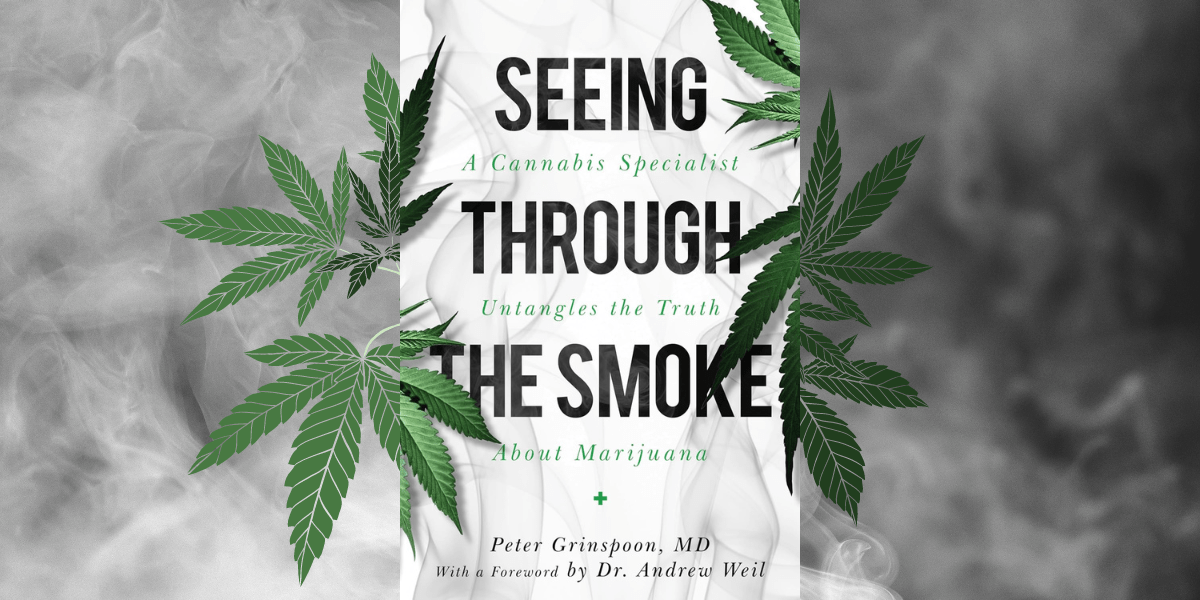
We had the honor to meet Dr. Peter Grinspoon, author of “Seeing Through the Smoke: A Cannabis Specialist Untangles the Truth About Marijuana,” and ask him questions.
Who Is Dr. Peter Grinspoon?
If Dr. Grinspoon looks familiar, you may have seen him on TedX, where he often lectures about cannabis, addiction, opioids, and psychedelic alternative medicine. Dr. Peter Grinspoon is a primary care physician and cannabis specialist at Massachusetts General Hospital and an educator and instructor at Harvard Medical School.
For twenty-five years, Peter Grinspoon, M.D. has been a medical cannabis advocate and has a touching story to share about how cannabis helped improve the quality of life of his sibling. That close experience inspired him to study medicinal cannabis and explore the wellness benefits it can offer patients.
Five Questions With Peter Grinspoon, M.D.
I had been watching the TEDx talk videos and reading blogs that mentioned Dr. Peter Grinspoon for years. What I found fascinating and appreciated most about his cannabis education content was the way that he objectively balanced the risks and potential benefits of medical cannabis.
Peter Grinspoon, M.D., is not only a physician who educates and treats patients struggling with addiction, but he also overcame his own substance dependence. In his former book, “Free Refills: A Doctor Confronts His Addiction,” he frankly discloses the period in his life when he had to confront his dependence on prescription medications. So, when Dr. Grinspoon unpacks the facts about cannabis and addiction, it also offers the truth and weight of personal experience.
We were grateful when Peter Grinspoon, M.D., agreed to answer five questions for patients using medical cannabis and those who are considering adding doctor-supervised cannabis to their treatment plan.
1. When did you begin advocating for doctor-supervised cannabis treatment plans? What inspired you to start educating patients?
I’ve always been interested in educating patients about medicinal cannabis from the very beginning of my medical career. This is because I witnessed my brother Danny benefit from cannabis during his unsuccessful battle with childhood leukemia.
My parents had illegally procured cannabis for him in the early 1970’s. Seeing how well many, if not most, patients do on medical cannabis helps keep me inspired.
2. Do you feel that medical cannabis can be a safer alternative compared to prescription opioid medications for conditions such as chronic pain?
Yes, it can be safer, and it is an important tool to have in our toolbox. Different patients do well with different medications, and it is important to have options.
Generally, for chronic pain, cannabis is quite obviously safer than opioids as it is impossible to fatally overdose on cannabis. I believe that cannabis can be a safer option than NSAIDs, as well as they harm people from heart attacks, gastritis, bleeding ulcers, and kidney damage.
Of course, cannabis has its own set of potential harms, which need to be watched carefully as well.

3. What do you think patients should know about the potential risks of using opioid medications for long-term symptom management?
Opioids are absolutely required for severe acute pain syndromes, like right after surgery or with a broken bone. Yet, there just isn’t good data that they are effective for chronic pain, especially for mild to moderate chronic pain.
[Opioid medications] are associated with addictions and overdoses, as well as falls and cognitive impairment, though, again, for some people, they are quite appropriate.
Generally, cannabis is safer as there is no fatal, toxic dose, and many of the harms of cannabis can be avoided by careful patient selection and by keeping the dosages on the lower side.
4. Why do you think some patients hesitate to try medical cannabis after other therapeutic approaches have not helped with their symptoms?
We are still recovering from a half-century war on cannabis users, part of the larger war on drugs, where both the U.S. Government and the medical establishment in this country propagated lots of scary mistruths which exaggerated the potential harms of cannabis and minimized the benefits.
Decades of propaganda can sink in, and these inflated negative impressions, unfortunately, prevent many from accessing what is often a relatively non-toxic and useful medication.
5. Tell us about your new book, “Seeing Through The Smoke: A Cannabis Specialist Untangles the Truth About Marijuana”.
I was born into a front-row seat to the legalization movement because my father, Dr. Lester Grinspoon, was a tireless advocate for cannabis legalization.
In ‘Seeing Through the Smoke,’ I trace out how we arrived at the present moment, and I look at cannabis from all angles — the pro, the anti, and everything in between. I go through each of the purported harms (real and imagined) as well as the claimed benefits, referencing the latest science.
I discuss how cannabis can help people beyond in a strictly medical sense, how it can help with lifestyle enhancement, sex, art, creativity, music, mindfulness, and connection to other people. I also discuss, more autobiographically, how cannabis has helped members of my family and how I have found it useful in my own life.
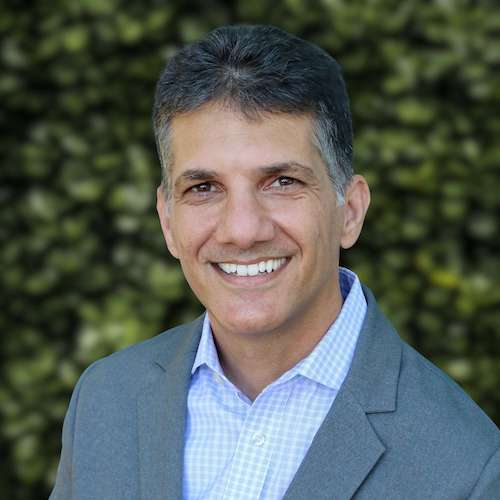
Aaron Bloom, an experienced healthcare attorney, serves as the CEO of DocMJ and Medwell Health and Wellness Centers, where he has overseen the organizations’ mission and growth since 2016. In addition to his leadership roles, Aaron serves on the Board of Directors for Waterfall Bank, bringing his expertise in healthcare, compliance, and strategic growth to the financial services sector.
Aaron’s passion for improving patients’ lives stems from more than 20 years of owning, operating, and representing traditional healthcare organizations. Throughout his career, he has remained committed to finding better ways to relieve suffering and expand access to innovative, patient-centered care. As CEO, Aaron works each day to help patients achieve better health and wellness through the therapeutic benefits of medical cannabis and other evidence-based alternative medicines.