
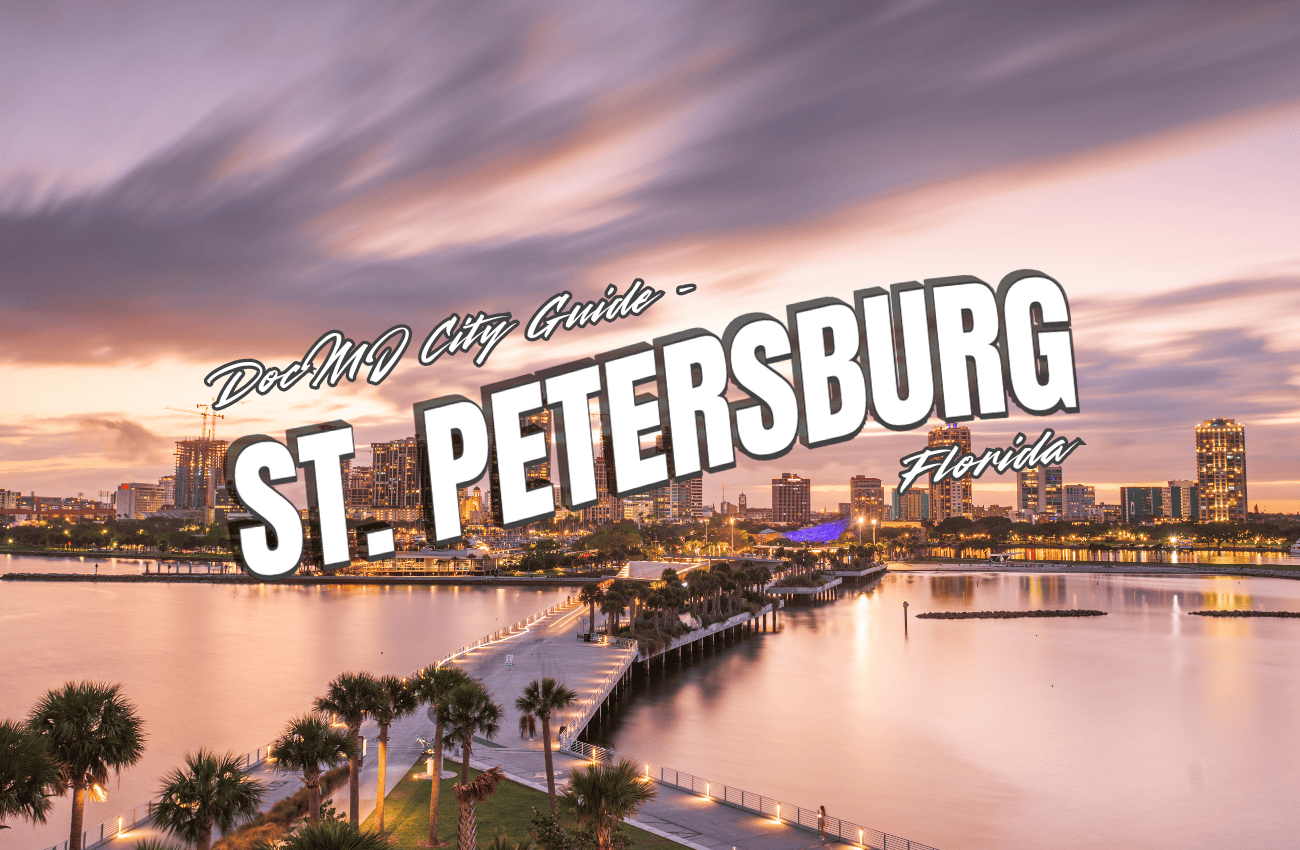
If you live in St. Petersburg or you are planning to spend time here, cannabis can feel confusing. You hear that it is legal, but only sometimes.
You see dispensaries, yet you also hear about arrests. You read about a St Petersburg medical marijuana card, but hemp products are sold in smoke shops without one.
This guide walks you through how cannabis actually works in St. Petersburg so you can understand the rules, the risks, and the real-life consequences before you make any decisions.
Is Cannabis Legal in St. Petersburg, Florida?
Yes, medical marijuana is legal in St. Petersburg. Recreational cannabis is not legal under Florida law.
That distinction matters more than it first appears. Florida allows qualified patients to purchase cannabis through the state medical marijuana program, but using cannabis without a valid medical card remains illegal under state law. You cannot legally walk into a dispensary and buy marijuana for recreational use the way you can in states like Colorado.
St. Petersburg follows Florida state law, but local enforcement policies also play a role. Some cities issue civil citations for small amounts instead of making arrests. That does not make recreational use legal. It simply changes how minor possession may be handled in certain situations. You are still subject to state law, and outcomes can depend on the specific circumstances of the encounter.
You also need to understand the federal layer. Cannabis remains illegal under federal law. While federal authorities do not typically target individual users who comply with state law, federal illegality affects:
- Firearm ownership under federal rules
- Certain federal employment positions
- Housing situations involving federal assistance
If you work for a federal contractor, serve in the military, or live in federally subsidized housing, those federal rules can directly affect you. A state-issued medical card does not override federal restrictions.
Legality is not a simple yes-or-no question. It operates at the state, local, and federal levels at the same time. If you only look at one layer, you miss how the system actually functions and where real risk may still exist.
Why Florida’s Cannabis System Is Different From Other States
Florida runs a medical-only cannabis system, and it uses what is called a vertically integrated structure. This means each licensed company must grow, process, transport, and sell its own cannabis products. Independent growers and independent retailers cannot freely enter the market.
In states with open market systems, one company might grow cannabis, another might process it, and many separate dispensaries might sell it. That structure usually leads to greater product variety and stronger price competition, which can make a real difference when it comes to affording medical marijuana on a fixed income. In Florida, the limited number of licensed operators shapes what you see in dispensaries.
You may notice:
- Fewer brands compared to recreational states
- Higher average prices
- Products that come from a small group of state-approved companies
Because companies control the full supply chain, they also control strain availability, product formats, and inventory flow. If one company experiences cultivation issues, it can affect availability across its retail locations. There is less buffer in the system than in open-market states with dozens of independent suppliers.
This structure also explains why expansion moves slowly. New licenses require state approval, and the process involves strict oversight, litigation, and regulatory review. Market entry is expensive and tightly controlled.
The system was built to control production tightly and monitor patient access. It was not built to create an open retail market. That difference explains why Florida feels more restrictive than states that legalized recreational use. When you understand the structure, the limitations make sense as policy design rather than an accident.
How Medical Marijuana Works in Florida
If you want to legally purchase cannabis in St. Petersburg, you must participate in Florida’s medical marijuana program. That process has several steps, and each one serves a purpose tied to oversight and medical framing, including limits on the amount of marijuana you can legally buy in Florida.
Physician Certification and Why It Exists
You cannot apply for a medical marijuana card on your own. A qualified physician must evaluate you and determine whether you have a qualifying condition under Florida law. Conditions include chronic pain, PTSD, cancer, epilepsy, and several others defined by statute.
This requirement exists to frame cannabis as a medical treatment rather than a consumer product. The physician does not simply hand you a card. They diagnose, review your medical history, assess prior treatments, and enter a recommendation into the state system if appropriate.
The certification is not permanent. You must schedule follow-up appointments to maintain eligibility. These visits allow the physician to monitor effectiveness, side effects, dosage patterns, and continued medical need. If you miss renewals, your authorization can lapse, and dispensaries cannot sell to you until the issue is resolved.
The State Registry and Purchase Tracking
Once a physician enters your recommendation, you register with the Florida Office of Medical Marijuana Use. The state issues you a medical marijuana card after approval. This card serves as proof of eligibility when purchasing from licensed dispensaries.
Every purchase you make is recorded in a state database. This tracking system monitors how much cannabis you buy within specific time windows. Dispensaries check the registry before completing each sale to confirm that you remain within your allowed amount.
This tracking structure exists to prevent diversion and to enforce purchase limits. It also creates accountability. If your usage pattern changes dramatically, it is visible within the system. That level of oversight is part of what distinguishes Florida’s program from recreational markets.
Purchase Limits and Renewal Rules
Florida sets specific limits on how much cannabis you can purchase within certain periods. These limits vary based on product type, such as smokable flower, edibles, tinctures, or inhalation products.
Physicians may request certain adjustments, but those must follow regulatory guidelines, and patients should also stay informed about the potential side effects of medical marijuana when determining appropriate use.
If you reach your limit, dispensaries cannot legally complete another sale until your allotment resets. You cannot simply visit a different dispensary to bypass the rule, because all sales are reported to the same centralized system.
You must also renew your physician certification and your state card periodically. Missing deadlines can interrupt your legal access, even if you still qualify medically. Planning ahead prevents access gaps that could affect symptom management.
What You Can Legally Possess and Where You Can Use It
As a registered patient, you can possess cannabis purchased through licensed Florida dispensaries within the allowed limits. Possession of cannabis outside the medical system remains illegal, even if it was obtained legally in another state.
Public use is not permitted. You cannot legally smoke or consume cannabis in public spaces, parks, sidewalks, beaches, or inside most vehicles. Driving under the influence of cannabis is illegal and can result in arrest, fines, and license suspension.
Use is generally limited to private property, and even then, property owners may restrict it. Landlords can prohibit smoking on their premises. Condominium associations may enforce rules that restrict consumption in shared areas.
Employment and housing also require careful attention. Florida employers can enforce drug-free workplace policies. A medical marijuana card does not automatically protect you from workplace discipline if your employer prohibits cannabis use, particularly in safety-sensitive roles.
You should also understand federal firearm rules. Federal law restricts firearm possession for individuals who use federally illegal substances, including marijuana. Even if you comply with Florida’s medical program, federal rules may still apply during background checks or firearm purchases, regardless of whether you are using cannabis under a physician’s supervision.
Legal possession does not mean unrestricted use. Your rights operate within defined boundaries that affect daily life decisions.
Hemp, Delta 8, and the Legal Gray Zone
You may see hemp-derived THC products, including Delta 8 or THCA flower, sold in smoke shops and convenience stores throughout St. Petersburg. These products exist because the 2018 federal Farm Bill legalized hemp containing less than 0.3 percent Delta 9 THC by dry weight.
This created a legal distinction between marijuana and hemp based on chemical thresholds rather than the intoxicating effect alone. Some manufacturers produce products that fall within the technical hemp definition but still produce psychoactive effects similar to marijuana.
This gray area carries risks. Testing standards can vary, and product labeling may not always reflect precise potency. Unlike medical marijuana products sold in licensed dispensaries, hemp products may not undergo the same level of regulatory scrutiny.
Before purchasing hemp-derived products, consider:
- Whether the product has third-party lab testing with accessible reports
- Whether local enforcement has taken action against similar products
- Whether you understand the difference between Delta 9 THC and other cannabinoids
Laws in this area continue to shift. Regulatory agencies may revise rules, and enforcement priorities can change. When you purchase from the gray market, you face greater legal and quality-control uncertainty than when purchasing through Florida’s medical program.
How Cannabis Affects the Brain and Body
Cannabis affects your body primarily through cannabinoids such as THC and CBD. These compounds interact with your endocannabinoid system, which plays a role in mood regulation, appetite control, pain signaling, and memory formation, and these effects are often central to discussions around cannabis use for seniors and other patient populations.
How THC Works
THC binds to cannabinoid receptors in your brain. This binding alters neurotransmitter release, which changes how you perceive time, sensation, and emotion. That is why users report euphoria, relaxation, increased appetite, or altered sensory awareness.
The same mechanism can also impair short-term memory, coordination, and reaction time. Higher doses increase the likelihood of anxiety, rapid heart rate, or paranoia, especially in new users or individuals sensitive to THC.
Tolerance can develop with repeated exposure. As receptors adjust, you may require higher doses to achieve the same effect. This process can lead some individuals toward heavier use patterns over time, which increases the risk of dependency and withdrawal symptoms.
CBD and Non-Intoxicating Cannabinoids
CBD interacts differently with the body and does not produce the same intoxicating effects as THC. Some patients seek CBD-dominant products for conditions such as inflammation, anxiety, or seizure disorders.
Research remains ongoing, and not all claimed benefits are supported by strong clinical trials. Marketing claims often extend beyond current evidence. You should evaluate product claims carefully and consult healthcare providers if you take other medications.
CBD may also interact with certain prescription drugs by affecting how your liver metabolizes them. Even non-intoxicating cannabinoids carry medical considerations that deserve attention.
Tolerance and Dependency Mechanisms
Cannabis dependency develops when repeated use changes how your brain regulates reward and stress responses. Over time, your brain may adapt to regular THC exposure and reduce the natural production of certain signaling chemicals.
You may notice cravings, irritability when not using, sleep disturbances, or difficulty reducing consumption despite intending to cut back. Withdrawal symptoms are typically milder than with substances like alcohol or opioids, but they are real for some users.
Risk increases with high potency products, early age of first use, daily consumption, and use as a coping mechanism for stress without alternative supports. Recognizing these patterns early gives you the opportunity to adjust your behavior before dependence deepens.
When Cannabis Use Becomes Risky
Cannabis can pose higher risks for certain individuals. If you have a personal or family history of psychotic disorders, heavy THC exposure may increase the likelihood of psychiatric symptoms such as hallucinations or severe paranoia.
Anxiety and depression can also interact with cannabis use in complex ways. Some individuals report temporary relief, while others experience worsening symptoms with frequent or high-dose use. The effect can depend on dosage, potency, and personal vulnerability.
Adolescents and young adults face additional concerns. The brain continues developing into the mid twenties. Frequent high-potency use during this period may affect attention, memory, motivation, and academic or occupational performance.
Risk also increases when cannabis use interferes with daily functioning. If you begin to prioritize use over work, school, or relationships, or if you continue using despite legal or financial consequences, those are warning signs that deserve attention and possibly professional support.
What This Means for Beginners in St. Petersburg
If you are new to cannabis in St. Petersburg, your first step is not choosing a product. It is understanding the system you are entering and the responsibilities that come with it.
Ask yourself clear questions. Are you eligible for Florida’s medical program? Are you prepared to follow certification and renewal rules? Do you understand the legal boundaries around possession, driving, and public use?
Approach health effects with the same clarity. Start with low doses if you proceed, especially with THC-dominant products. Give your body time to respond before increasing amounts. Avoid mixing cannabis with alcohol, particularly when you are inexperienced.
Most importantly, separate assumptions from facts. Florida’s cannabis environment is structured, regulated, and layered with overlapping laws. When you understand those layers and monitor your own use patterns carefully, you place yourself in a position to make informed, responsible decisions.
Frequently Asked Questions About Cannabis in St. Petersburg
Here are five common local questions people ask that were not fully addressed above, answered clearly and directly.
1. Can tourists apply for a Florida medical marijuana card?
No. You must be a Florida resident or seasonal resident with documented proof of residency. Short-term visitors cannot legally obtain a Florida medical marijuana card.
2. Can you travel with medical marijuana within Florida?
You may transport medical marijuana within Florida if it remains in its original packaging and you stay within legal possession limits. Crossing state lines remains illegal under federal law.
3. Does having a medical card protect you during a traffic stop?
A valid card confirms legal patient status, but it does not permit impaired driving. Law enforcement can still investigate driving under the influence if impairment is suspected.
4. Are medical marijuana purchases reported to health insurance companies?
No. Medical marijuana purchases are not billed to health insurance. Transactions occur directly between you and the dispensary, and insurance does not cover costs.
5. Can you grow your own cannabis at home in Florida?
No. Florida law does not allow home cultivation, even for registered medical marijuana patients. All legal cannabis must be purchased from licensed state dispensaries.
Start Your Medical Marijuana Journey with DocMJ
At DocMJ, we take the time to evaluate your condition carefully, answer your questions clearly, and guide you through Florida’s medical marijuana process step by step. We help you understand your options, document your eligibility, and stay compliant with state regulations so you can move forward with clarity and confidence. Schedule an appointment today.
Meet Christie, a dedicated writer and passionate advocate for medical cannabis. Living with Rheumatoid Arthritis (RA), Osteoarthritis (OA), Interstitial Lung Disease, and Pulmonary Fibrosis, Christie has found profound relief through the versatile world of medical cannabis. An advocate for holistic healing, with a deep belief in the power of cannabis, Christie shares insights to empower others seeking alternative solutions.